ISU Fresh Graduate Wins NSTC College Student Research Creativity Award for Developing Low-Cost Organic Solar Cells with Eco-Friendly Working Electrodes
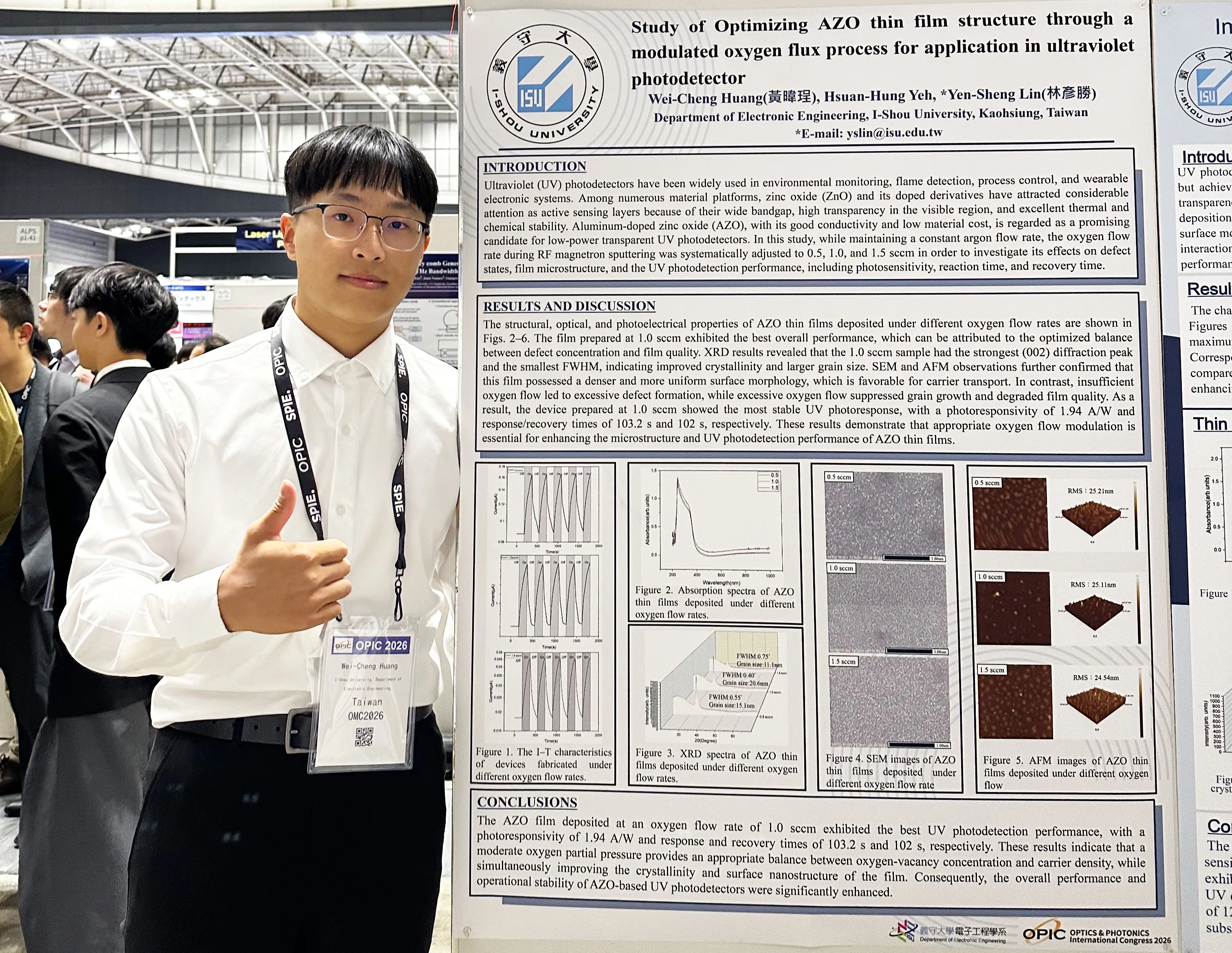
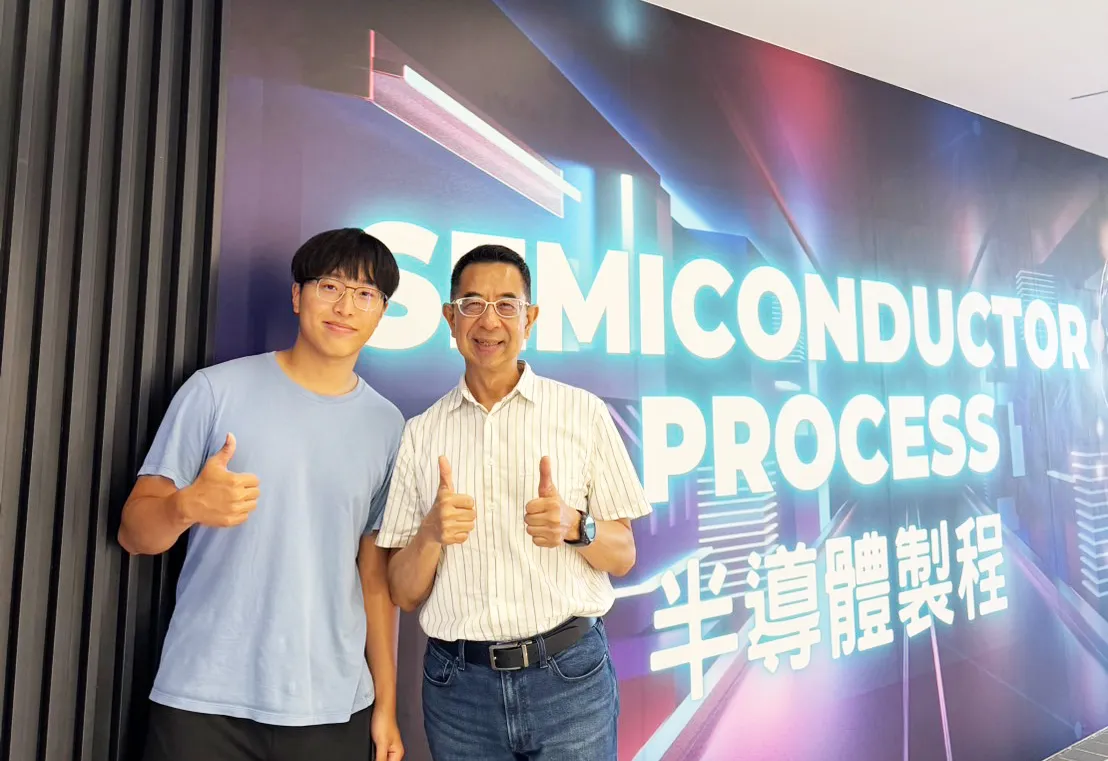
Mango juice and kiwi juice are not only everyday beverages but also potential materials for developing green energy technologies. Wei-Cheng Huang, who graduated this year from ISU’s Department of Electronic Engineering, received the 2025 College Student Research Creativity Award from the National Science and Technology Council (NSTC). Under the guidance of Professor Yen-Sheng Lin, Huang conducted research on dye-sensitized solar cells. By developing environmentally friendly working electrodes, he explored the use of organic materials to reduce production costs and minimize the use of harmful substances, demonstrating the contributions of university students to technological research and energy innovation.
Since enrolling in ISU’s Department of Electronic Engineering, Huang has conducted his research under the guidance of Professor Lin. From discussing research topics and collecting data to designing experiments, he gradually developed his research skills under the guidance of Professor Lin. Through continuous experimentation and trial and error, he gradually established solar cell research as his primary area of focus. Traditional silicon solar cells are among the most widely used solar energy technologies today. However, their manufacturing process relies on certain rare and toxic metals, making them relatively costly. Huang and his research team were committed to seeking breakthroughs. They began by exploring organic materials to optimize working electrodes through semiconductor processing to develop more cost-effective and environmentally friendly alternatives. After discussing their research direction with Professor Lin, Huang and his team members selected dye-sensitized solar cells and began investigating how key process parameters, such as interval time, number of cycles, and heat treatment, affect device performance, with the aim of improving the conversion efficiency of dye-sensitized solar cells. Encouragingly, the results showed that following process optimization, the device’s photoelectric conversion efficiency increased significantly, reaching up to five times that of the initial device. Looking ahead, Huang and his team will continue to develop more cost-effective, efficient, and environmentally friendly dye-sensitized solar cell technologies, aiming to advance greener manufacturing processes and contribute to the development of the green energy industry. According to Huang, the biggest challenge during the research process was that the experimental results often differed from expectations, requiring him to continually re-examine the materials, adjust the manufacturing process, and conduct repeated tests. Experiments do not always succeed on the first try. Instead, repeated trials identify problems, allowing experience to accumulate and ultimately leading to more stable and reliable research outcomes. During his research, Huang also engaged in inter-university academic collaboration, participating in research exchanges with professors from various academic institutions. These interactions broadened his research perspectives through professional guidance and collaboration.
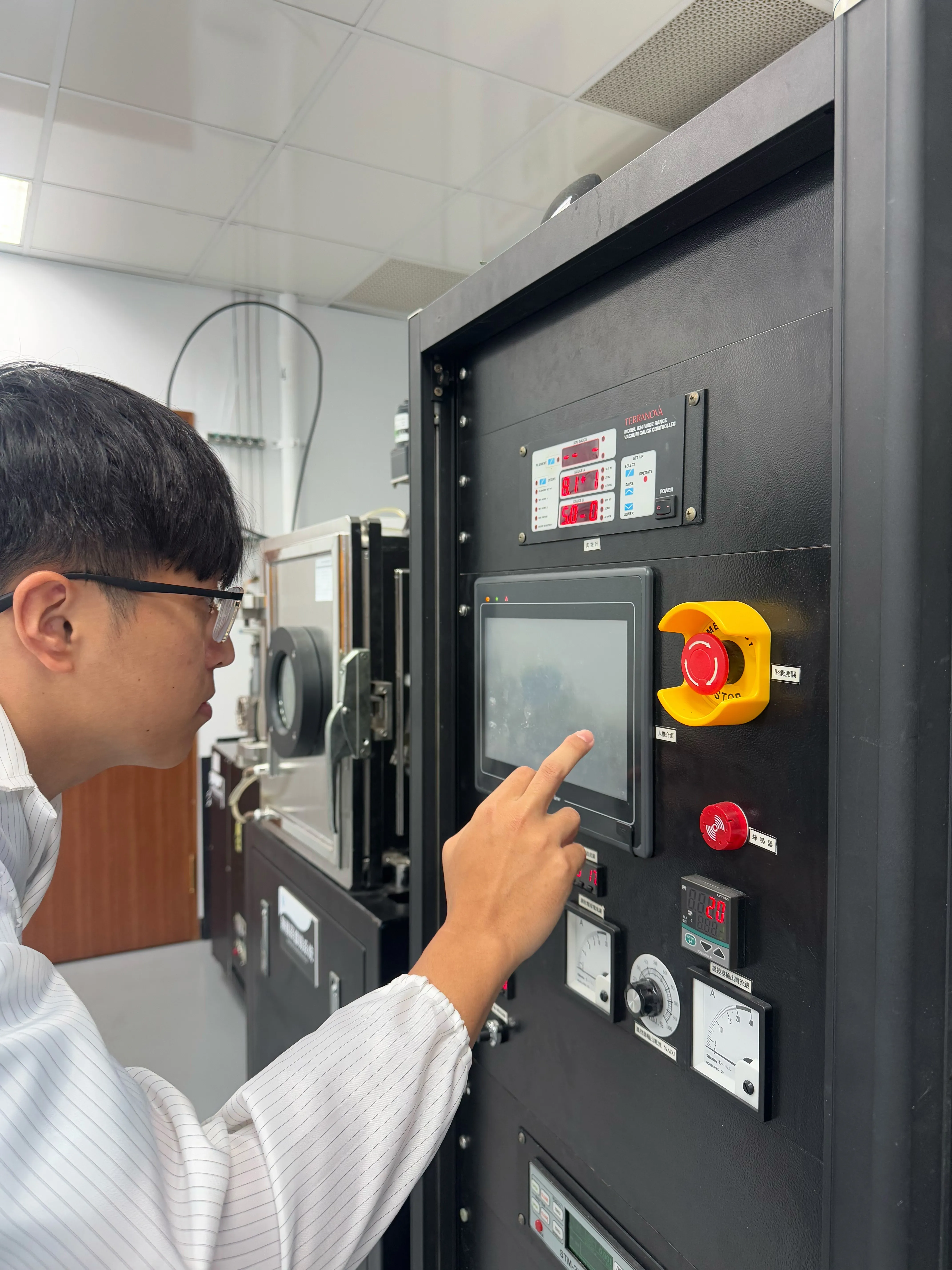
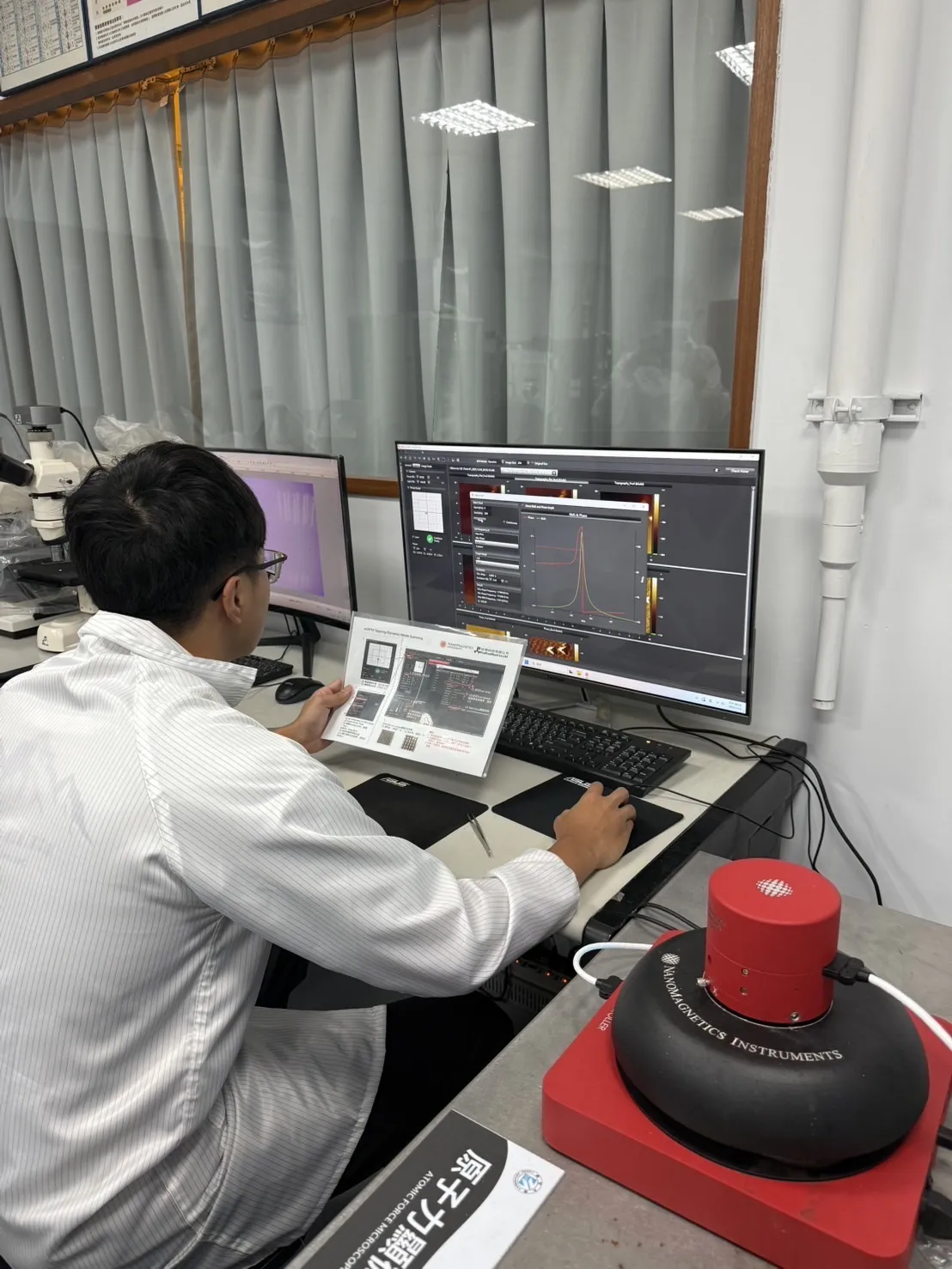
Reflecting on why he chose ISU, Huang said that he had aspired to become an engineer since high school. After researching programs offered by various universities, he found that ISU offered strong science and engineering education and comprehensive resources, making it an attractive choice among private universities in southern Taiwan. He therefore decided to enroll in the Department of Electronic Engineering. After enrolling at ISU, Huang actively made use of ISU’s research resources in addition to his coursework, including the Precision Instrument Center, the Semiconductor Advanced Process Virtual and Actual Areas, and the Green Photonics Practice Center. The comprehensive equipment and experimental facilities provide him with a practical environment for conducting solar cell research, allowing him to apply what he has learned in class to hands-on research.
In recent years, ISU has continued to strengthen its teaching and research resources in the fields of science, engineering, semiconductors, green energy, and smart technology. ISU encourages students to go beyond classroom learning and engage in research projects in specialized fields. Through research initiatives, competitions, and inter-university collaboration, students can develop problem-solving skills, innovative thinking, and practical abilities.
For Huang, receiving the NSTC College Student Research Creativity Award is not only recognition of his research achievements but also a significant milestone in his four-year academic journey. This September, he will enroll in the master’s program in the Department of Photonics at National Sun Yat-sen University, where he will continue his research in optoelectronics and energy technology. Although he will pursue a different field of study and face more advanced academic challenges in the future, Huang said that the professional knowledge, research experience, and problem-solving skills he has gained at ISU will provide a strong foundation for his continued exploration of optoelectronic technology. From his initial exposure to research as a college student to exploring the possibilities of low-cost solar cells using natural organic materials, Huang gradually found his research direction through continuous learning and repeated experimentation. Looking ahead, he will continue pursuing research in optoelectronics and green energy, aiming to develop more cost-effective, environmentally friendly energy technologies and contribute to the advancement of sustainable energy development.