ISU Secures National Honors for Innovative Freshman Education at T-FYE Conference
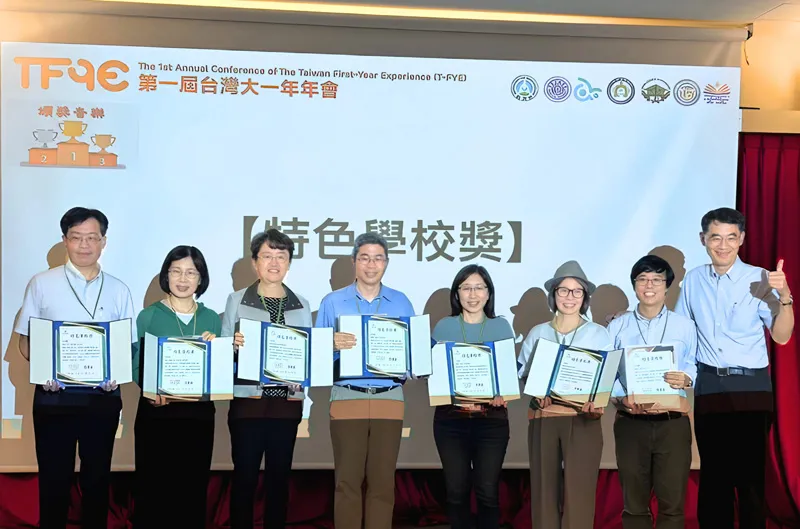
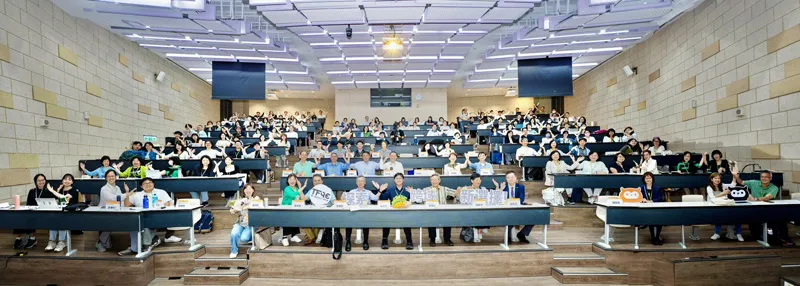
While most universities are still exploring ways to support freshmen's adaptation to campus life, ISU has already established a concrete, verifiable cultivation model through two years of practical implementation and data analysis. This innovative approach took center stage at the first Annual Conference of Taiwan First-Year Experience (T-FYE), hosted by National Tsing Hua University on April 10 and 11. Centered on the theme “Interdisciplinary, Exploration, New Choices,” the conference focused on transforming first-year education in the AI era. ISU distinguished itself at this national gathering, garnering the prestigious Featured School Award. Furthermore, the research team’s paper received the “FYE 50 Award” special recommendation, positioning the university’s approach as a national benchmark for excellence in freshman education.
Walking into the Well-being Center at ISU, one immediately notices a departure from the formal atmosphere of traditional administrative offices. The space is thoughtfully designed with a piano, lush greenery, a transparent gallery, and a dedicated “De-Stress Zone” for relaxation. Here, students can enjoy a cup of tea, discuss their future with a learning planner, or simply find a moment of quiet reflection. This environment serves as the heart of ISU’s “Space × Curriculum × Community” design strategy. Tai-Chi Wu, Dean of Student Affairs at ISU, notes that traditional administrative settings often create a sense of distance and pressure, leaving students unsure of where to turn or hesitant to speak up when facing challenges. The Well-being Center was established to lower the threshold for seeking help. “We want students to see themselves and to be seen,” says Dean Wu. “Support should not only be triggered by a crisis; it should be a natural part of daily learning.” Data from the 2025 academic year show that this approach is delivering concrete results. The center hosted 214 events, ranging from yoga and career exploration to psychological support and student showcases, maintaining an overall satisfaction rate of over 90%. Notably, the number of freshmen proactively seeking assistance from “Learning Planners” surged by 119% compared to the previous year. This shift indicates that students are moving away from being passive recipients of help and are instead becoming proactive architects of their own educational journeys.
Regarding curriculum design, ISU has established Smart Tech 101 as a required general education course for all freshmen. The goal is not to produce engineers but to ensure that every student, regardless of whether they major in languages, communication, or management, can grasp how AI and digital technology are transforming society and reflect on how these shifts intersect with their own futures. A study involving over a thousand students in the 2024 academic year showed that their familiarity with emerging technologies doubled on average after completing the course. Hou-Guang Chen, Director of the Center for General Education, notes that the course prioritizes developing a concrete understanding of technology through case studies and hands-on practice over memorizing technical jargon. “Once they finish the course, students not only know what AI is but understand how these tools can empower them,” says Director Chen. Furthermore, ISU promotes the “One Student, One Timetable” initiative. By implementing interdepartmental credit transfer and flexible elective mechanisms, the university enables students to design personalized learning paths aligned with their interests and career goals, effectively breaking down traditional academic silos and institutionalizing interdisciplinary learning. Beyond the classroom, ISU sustains learning momentum through student learning communities. These groups, which focus on academic enrichment, professional certifications, and practical projects, saw cumulative participation reach 933 individuals by the end of 2025, with satisfaction rates consistently maintained between 93% and 96%.
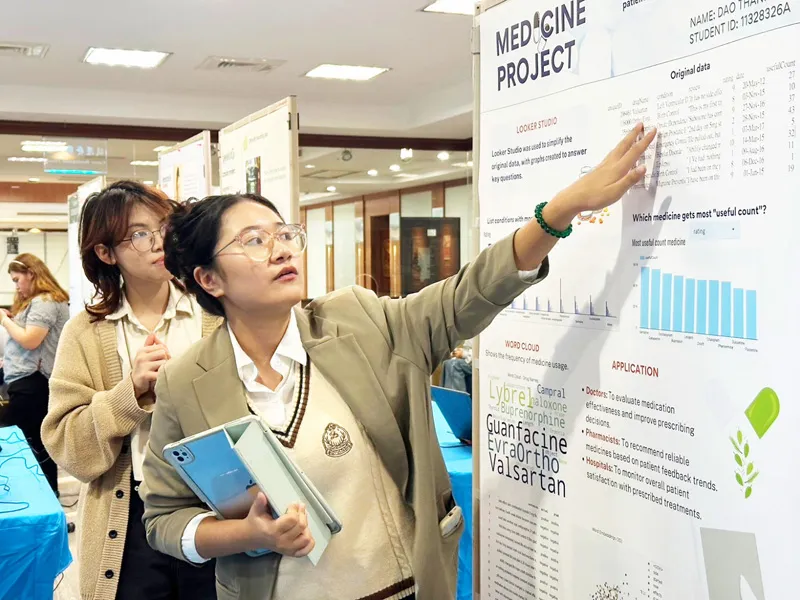
Beyond the institution-wide recognition, a research team led by Wei-Yi Cheng, Director of the Center for Teaching and Learning Development, earned a “Special Recommendation” at the FYE 50 Award organized by the Ministry of Education. Their paper, titled The Triple Design of Space, Curriculum, and Community: ISU’s Practical Model for Freshman Success, was selected for a poster presentation at the national conference, allowing ISU to share its successful framework with educators across Taiwan. “Higher education transcends the routine of coursework and exams; it is a journey of self-discovery,” says Director Cheng. “Our goal is to encourage students to begin exploring and reflecting during their first year, rather than waiting until graduation to confront their future.” Li-Ching Chang, the Dean of Academic Affairs, emphasizes that the significance of these twin honors extends far beyond external recognition; more importantly, they validate the strategic direction of the university’s institutional design over the past two years. “The first year is a critical juncture for students to rethink their educational paths,” notes Dean Chang. “Through this system, we ensure that students can find support when they need it and make more informed, purposeful choices about their learning journey.”
Beyond the institution-wide recognition, a research team led by Wei-Yi Cheng, Director of the Center for Teaching and Learning Development, earned a “Special Recommendation” at the FYE 50 Award organized by the Ministry of Education. Their paper, titled The Triple Design of Space, Curriculum, and Community: ISU’s Practical Model for Freshman Success, was selected for a poster presentation at the national conference, allowing ISU to share its successful framework with educators across Taiwan. “Higher education transcends the routine of coursework and exams; it is a journey of self-discovery,” says Director Cheng. “Our goal is to encourage students to begin exploring and reflecting during their first year, rather than waiting until graduation to confront their future.” Li-Ching Chang, the Dean of Academic Affairs, emphasizes that the significance of these twin honors extends far beyond external recognition; more importantly, they validate the strategic direction of the university’s institutional design over the past two years. “The first year is a critical juncture for students to rethink their educational paths,” notes Dean Chang. “Through this system, we ensure that students can find support when they need it and make more informed, purposeful choices about their learning journey.”