ISU Broadens Healthcare Horizons from Physical Therapy to Humanities in Germany
Traditional medical education has long been synonymous with dense textbooks and complex anatomical diagrams, often treating scientific precision and humanistic warmth as parallel lines that never intersect. However, the College of Medicine at ISU is redefining next-generation healthcare education through a transformative trans-Eurasian internship program. This past January, supported by scholarships from the Ministry of Education and the autonomous learning project in general education, Professor Guan-Chun Lin of the School of Medicine led five outstanding students from the Department of Physical Therapy to Germany. There, they embarked on a month-long interdisciplinary internship at the 400-year-old University Hospital Düsseldorf (UKD). Moving far beyond the conventional framework of medical
training, this journey immersed students in a rich spectrum of experiences, from studying century-old Nobel Prize manuscripts and practicing empathy in hospice care to observing clinical realities in trauma units and conducting cross-cultural interviews on the streets. This multidimensional approach successfully cultivated a holistic medical literacy that seamlessly blends top-tier professional competence with a broad social perspective.
ISU Medical Internship Bridges Nobel Legacies with Contemporary Healthcare Ethics
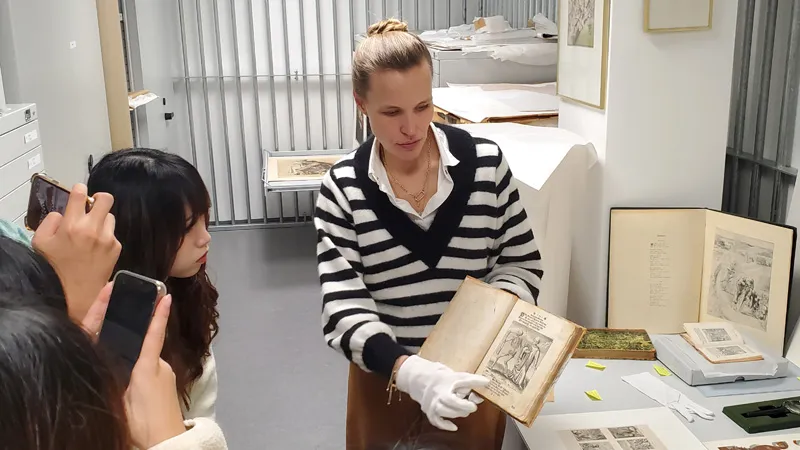
Departing from conventional programs that plunge students directly into clinical wards, the internship commenced at the highly esteemed Department of the History, Philosophy and Ethics of Medicine. This deliberate arrangement allowed students to step away from the fast-paced intensity of clinical environments and engage with the deep academic roots of their profession. During this rotation, students were granted the rare privilege of handling precious medical manuscripts and artwork preserved since the 16th century. They also actively participated in archiving the historical documents and research papers of Sir John C. Eccles, the 1956 Nobel Laureate in Physiology or Medicine. By anchoring their learning in this rich historical and humanistic context, the students gained a profound understanding of the ethical evolution of medical science, preparing them to navigate the complex moral landscape of the AI era.
Guided by leading experts, the ISU students bridged temporal boundaries, reflecting on pressing contemporary medical ethics through a deep historical lens. Through specialized seminars, the team delved into critical dilemmas arising from today’s rapid advances in AI, exploring complex issues such as liability in AI-driven medical disputes, the ethical dimensions of AI-assisted diagnosis, and the moral controversies surrounding AI applications in dementia care. This systematic ethical discourse and vibrant exchange of diverse perspectives did more than just deepen the students’ understanding of the essence of medicine. It sparked a profound transformation, moving Taiwanese students away from their conventional habit of “seeking standard answers” and effectively internalizing critical thinking as a core pillar of their professional development.
Germany’s Pediatric Care Redefines Healing Environments through Color and Playfulness
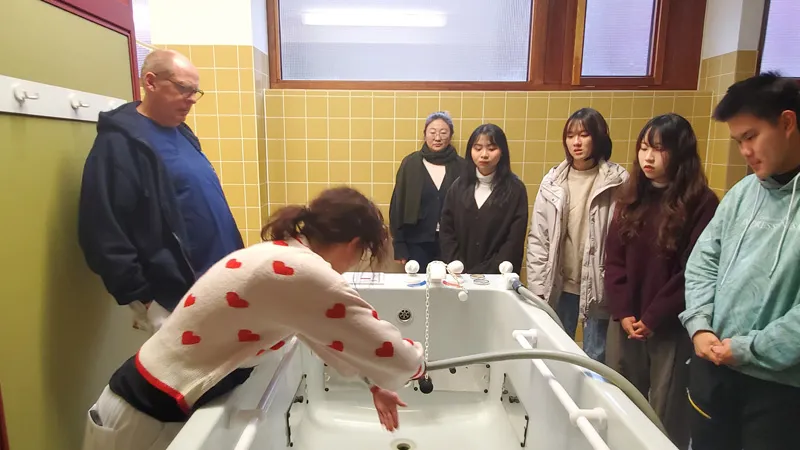
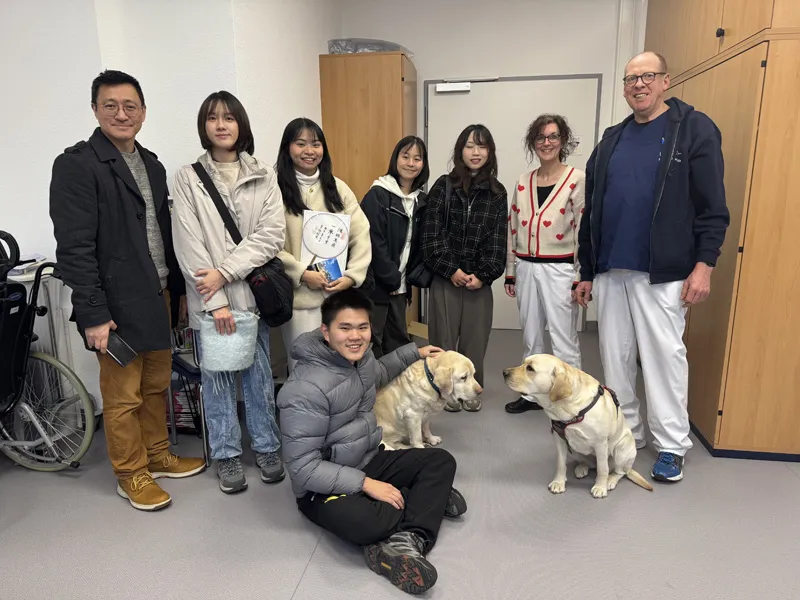
As they advanced to the clinical rotation phase, the student team’s experiences in the pediatric physical therapy department offered them a profound insight into the German healthcare system, which seamlessly blends rigorous scientific precision with compassionate warmth. Unlike the cold, sterile atmosphere typical of traditional clinics, the department’s spatial design infuses a vibrant, childlike playfulness. The walls feature photographs of plush toys traveling to famous landmarks around the world, creating a warm, imaginative, and healing sanctuary. These thoughtful details do more than just open a window to the world for severely ill, long-term hospitalized children who cannot step outside. They also subtly alleviate fear and resistance toward rehabilitation and treatment, ensuring that the medical journey delivers both professional efficacy and profound humanistic care.
ISU Medical Internship Bridges Nobel Legacies with Contemporary Healthcare Ethics
Departing from conventional programs that plunge students directly into clinical wards, the internship commenced at the highly esteemed Department of the History, Philosophy and Ethics of Medicine. This deliberate arrangement allowed students to step away from the fast-paced intensity of clinical environments and engage with the deep academic roots of their profession. During this rotation, students were granted the rare privilege of handling precious medical manuscripts and artwork preserved since the 16th century. They also actively participated in archiving the historical documents and research papers of Sir John C. Eccles, the 1956 Nobel Laureate in Physiology or Medicine. By anchoring their learning in this rich historical and humanistic context, the students gained a profound understanding of the ethical evolution of medical science, preparing them to navigate the complex moral landscape of the AI era.
Guided by leading experts, the ISU students bridged temporal boundaries, reflecting on pressing contemporary medical ethics through a deep historical lens. Through specialized seminars, the team delved into critical dilemmas arising from today’s rapid advances in AI, exploring complex issues such as liability in AI-driven medical disputes, the ethical dimensions of AI-assisted diagnosis, and the moral controversies surrounding AI applications in dementia care. This systematic ethical discourse and vibrant exchange of diverse perspectives did more than just deepen the students’ understanding of the essence of medicine. It sparked a profound transformation, moving Taiwanese students away from their conventional habit of “seeking standard answers” and effectively internalizing critical thinking as a core pillar of their professional development.
Germany’s Pediatric Care Redefines Healing Environments through Color and Playfulness
As they advanced to the clinical rotation phase, the student team’s experiences in the pediatric physical therapy department offered them a profound insight into the German healthcare system, which seamlessly blends rigorous scientific precision with compassionate warmth. Unlike the cold, sterile atmosphere typical of traditional clinics, the department’s spatial design infuses a vibrant, childlike playfulness. The walls feature photographs of plush toys traveling to famous landmarks around the world, creating a warm, imaginative, and healing sanctuary. These thoughtful details do more than just open a window to the world for severely ill, long-term hospitalized children who cannot step outside. They also subtly alleviate fear and resistance toward rehabilitation and treatment, ensuring that the medical journey delivers both professional efficacy and profound humanistic care.
Behind this compassionate and welcoming environment lies a near-rigorous dedication to professional standards. Serving a diverse patient population that spans from premature infants in incubators to 18-year-old adolescents, the department
demands that therapists possess not only a profound understanding of human development but also highly precise clinical skills. What impressed the ISU students most was this uncompromising professional attitude. For instance, the clinic features a large ball pit designed for tactile stimulation; after every single use, the therapists personally sanitize the entire setup, meticulously cleaning thousands of plastic balls, mats, and equipment to ensure a completely safe and sterile environment for immunocompromised children. Furthermore, the German interns in the same age group demonstrated exceptional engagement and accountability in their clinical duties. Their rigorous and precise execution served as a powerful inspiration for the ISU cohort, prompting them to deeply reflect on the standards and direction of their own professional growth.
Such fruitful learning outcomes were not achieved overnight. Two years prior to the departure, the principal investigator, Professor Guan-Chun Lin, initiated a systematic and rigorous preparatory training program. The curriculum encompassed English presentation skills, foundational German pronunciation, and deep dives into medical humanities. Furthermore, a peer-to-peer co-learning mechanism spanning multiple cohorts and departments was established to foster diverse exchange and mutual support. Through this empowering process, student Yi-Hsuan Huang, who was initially introverted and doubtful of her own capabilities, gradually unlocked her potential under the steady encouragement of mentors and peers. “Professor Lin never held back guidance just because I was a freshman at the time; instead, he offered unwavering mentorship and trust,” Huang reflected. “This journey made me deeply realize that the professional value of a physical therapist is not only reflected in precise manual techniques but is fundamentally rooted in a profound respect for life and humanistic care.”
“Science seeks truth, while the humanities manifest value,” Professor Guan-Chun Lin noted, highlighting the core ethos of this initiative. This program represents far more than a professional learning journey spanning half the globe; it is a profound exploration and practical realization of life, society, and core values. Through this forward-looking international exchange model, the College of Medicine at ISU transcends academic boundaries, remaining deeply dedicated to cultivating healthcare professionals who possess both robust clinical competence and a broad humanistic perspective. The ultimate hope is that these ISU students, having been deeply immersed in German medical practices and socio-cultural frameworks, will bring back to Taiwan the vital concepts of “compassionate warmth with professional boundaries” and “respect for the laborer’s body.” As they drive the continuous advancement of medical technology, they will uphold the healthcare provider’s original calling to honor and care for life, ultimately shaping a compassionate, warm, and positively reinforcing healthcare environment for society.
Perhaps the most poignant chapter of the journey occurred when the team stepped into the palliative care ward, an experience that left a profound and lasting impression. “What greeted us was not an array of cold medical instruments, but vibrant paintings co-created by the patients and art therapists,” student Hsin-Min Hua recalled. “This environment allows patients to maintain the rhythm of ‘everyday life,’ ensuring they feel deeply respected and understood during the final stage of their lives.” The German hospice facility even features a dedicated garden, allowing terminally ill patients to cherish quiet, invaluable moments with their families amidst the sunshine and gentle breezes. This meticulous safeguarding of human dignity led these future physical therapists to a profound realization. While medical healing may
ultimately reach its limits, the warmth of compassionate care and companionship knows no bounds.
ISU Medical Students Step Beyond Hospital Walls to Examine German Sustainability and Welfare
The footprint of this internship extended far beyond the hospital walls. Demonstrating exceptional initiative, the ISU students translated theories of medical sociology into real-world practice, stepping into downtown Düsseldorf to conduct street interviews and video-document local residents’ daily sustainability practices. From the widespread availability of organic foods in supermarkets to the bottle deposit system integrated into every household, the cohort gradually realized that public health and environmental sustainability are never mere political slogans; rather, they are collective habits deeply embedded in the details of daily life. “This internship was not just a journey to acquire clinical skills but a profound cultural and institutional revelation,” student Yen-Yu Li shared. “Based on a high-welfare, high-tax solidarity society (Solidargesellschaft), Germany has constructed a supportive environment that allows every citizen to maintain their dignity.”
ISU Integrates Science and Humanities to Empower Next-Generation Healthcare Leaders
ISU Medical Students Step Beyond Hospital Walls to Examine German Sustainability and Welfare
The footprint of this internship extended far beyond the hospital walls. Demonstrating exceptional initiative, the ISU students translated theories of medical sociology into real-world practice, stepping into downtown Düsseldorf to conduct street interviews and video-document local residents’ daily sustainability practices. From the widespread availability of organic foods in supermarkets to the bottle deposit system integrated into every household, the cohort gradually realized that public health and environmental sustainability are never mere political slogans; rather, they are collective habits deeply embedded in the details of daily life. “This internship was not just a journey to acquire clinical skills but a profound cultural and institutional revelation,” student Yen-Yu Li shared. “Based on a high-welfare, high-tax solidarity society (Solidargesellschaft), Germany has constructed a supportive environment that allows every citizen to maintain their dignity.”
ISU Integrates Science and Humanities to Empower Next-Generation Healthcare Leaders
Such fruitful learning outcomes were not achieved overnight. Two years prior to the departure, the principal investigator, Professor Guan-Chun Lin, initiated a systematic and rigorous preparatory training program. The curriculum encompassed English presentation skills, foundational German pronunciation, and deep dives into medical humanities. Furthermore, a peer-to-peer co-learning mechanism spanning multiple cohorts and departments was established to foster diverse exchange and mutual support. Through this empowering process, student Yi-Hsuan Huang, who was initially introverted and doubtful of her own capabilities, gradually unlocked her potential under the steady encouragement of mentors and peers. “Professor Lin never held back guidance just because I was a freshman at the time; instead, he offered unwavering mentorship and trust,” Huang reflected. “This journey made me deeply realize that the professional value of a physical therapist is not only reflected in precise manual techniques but is fundamentally rooted in a profound respect for life and humanistic care.”
“Science seeks truth, while the humanities manifest value,” Professor Guan-Chun Lin noted, highlighting the core ethos of this initiative. This program represents far more than a professional learning journey spanning half the globe; it is a profound exploration and practical realization of life, society, and core values. Through this forward-looking international exchange model, the College of Medicine at ISU transcends academic boundaries, remaining deeply dedicated to cultivating healthcare professionals who possess both robust clinical competence and a broad humanistic perspective. The ultimate hope is that these ISU students, having been deeply immersed in German medical practices and socio-cultural frameworks, will bring back to Taiwan the vital concepts of “compassionate warmth with professional boundaries” and “respect for the laborer’s body.” As they drive the continuous advancement of medical technology, they will uphold the healthcare provider’s original calling to honor and care for life, ultimately shaping a compassionate, warm, and positively reinforcing healthcare environment for society.